
Key Takeaways
- Invisalign uses clear, removable trays, and braces use brackets and wires that stay in place.
- The Canadian Association of Orthodontists recommends that children see an orthodontic specialist by age 7.
- Braces can suit younger kids and complex bite needs, while Invisalign can work well for motivated teens.
- Cost depends on treatment length and bite needs, and some dental plans include orthodontic coverage.
- A consultation helps you match the option to your family’s bite, goals, and routine.
Your child flashes a grin for the school photo, and you notice a tooth sitting a little crooked. Maybe you’ve thought about straightening your own smile, too. When families visit Shine Dental, one of the first questions parents ask is whether Invisalign or braces makes more sense.
The right choice depends on your bite, your age, and your daily routine, with braces often suiting younger kids and complex bites and Invisalign often suiting motivated teens and adults. The orthodontic services at Shine Dental give you a chance to compare both options side by side with a dentist who knows your family.
What Is the Difference Between Invisalign & Braces?
Both options gently move teeth over time. The main difference is how they sit in your mouth and how they fit into your day.
How Invisalign Works
Invisalign uses clear trays custom made to fit your teeth. You pop them out to eat and brush, then slip them back in. Every week or two, you switch to a new set.
Plan to wear them for at least 22 hours each day, including overnight, or as directed by your dental team.
How Traditional Braces Work
Braces use brackets and wires that gently shift teeth over time. They stay fixed in place, so there are no trays to lose in a lunch bag or leave on a restaurant napkin.
You visit your dentist in Winnipeg for regular adjustments as treatment moves along.
Invisalign vs. Braces for Kids & Teens
Children can have an early orthodontic check. The Canadian Association of Orthodontists recommends seeing an orthodontic specialist by age 7. An early assessment does not necessarily mean treatment starts right away. Your dentist can monitor your child’s bite, discuss timing, and refer you to a specialist if needed.
Braces can suit younger kids and kids with more complex bite needs, and since they stay in place, you don’t have to remind anyone to wear them.
Invisalign can work well for responsible, motivated teens. If your teen already keeps track of a phone, a hockey bag, and a homework schedule, a tray case may slide right into the routine.
Lifestyle Factors for Your Family
Food, Sports, & Music
With Invisalign, your child removes the aligners to eat, so pizza night and crunchy apple slices stay on the menu. Braces mean skipping sticky, chewy, and hard snacks like caramels, taffy, and popcorn.
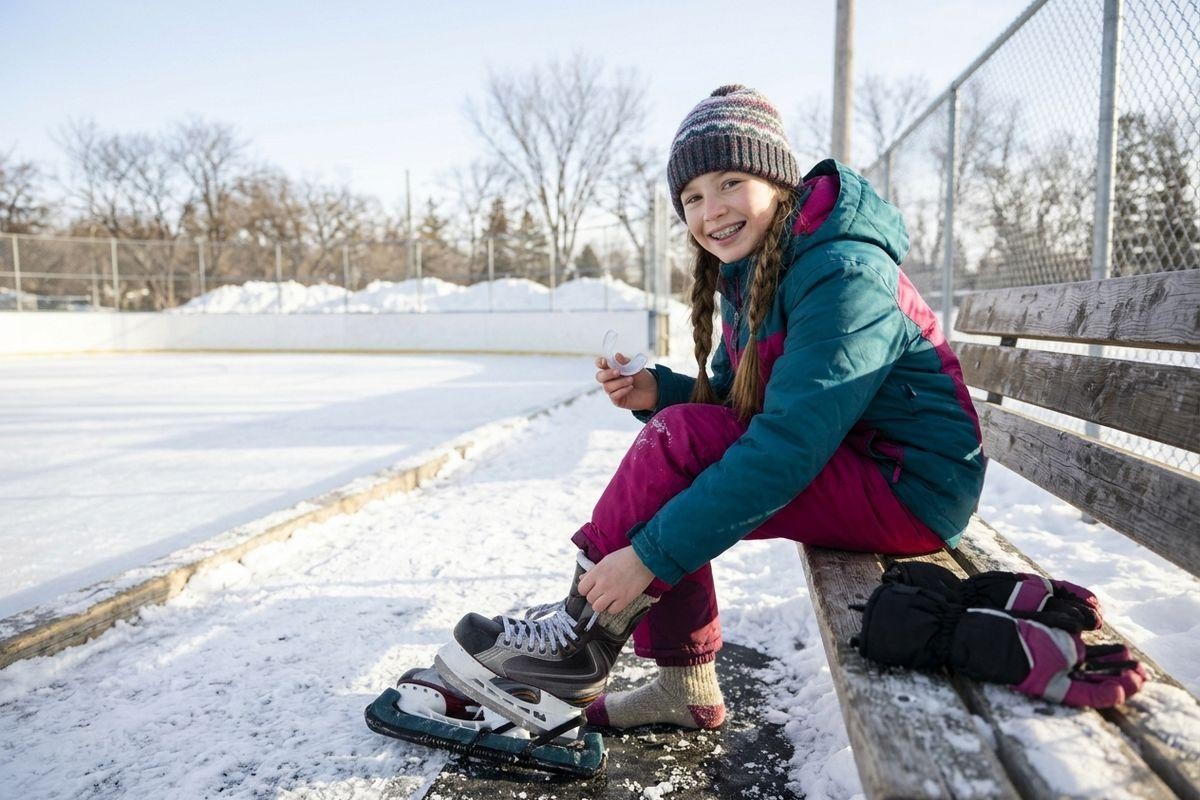
Active kids can wear a mouthguard during soccer, basketball, or hockey to help protect their teeth on the field or ice. If your child plays a wind instrument, ask the team which option feels easier during practice.
Daily Care & Hygiene
A few simple habits can help keep teeth clean during treatment:
- Brush your teeth before putting trays back in.
- Use floss threaders to clean around brackets and wires.
- Keep up regular hygiene visits during treatment.
How Much Do Invisalign & Braces Cost in Winnipeg?
Cost depends on how long treatment takes and what your bite needs. A simple case and a complex one can look quite different on paper, so the team gives you a personal estimate at your consultation.
Some dental plans include orthodontic coverage. Check your benefits and bring your plan details to your visit so the team can help you review your options.
Financing options may be available to help spread costs over time. Ask the team about eligibility and terms.
How to Choose the Right Option for Your Smile
Questions to Ask at Your Consultation
Bring a short list of questions so you leave with clear answers:
- How long is treatment likely to take?
- Which option fits your bite, goals, and routine?
- What does retainer care look like afterward?
Jot the answers down so you can talk them over at the kitchen table later.
Benefits of a Local Family Dentist in Winnipeg
When orthodontics, hygiene, and cosmetic care are available at the same clinic, your dental team can coordinate aspects of your care. Depending on your needs, they may recommend seeing an orthodontic specialist or another provider.
Once treatment wraps up, a cosmetic dentist in Winnipeg can help plan smile touch-ups, such as whitening, for parents or teens who want a little extra polish.
Care close to home, work, and school also means shorter drives and less time away from class.
Plan Your Family’s Next Smile Step With Shine Dental
Whether your 11-year-old needs an orthodontic check or you’re curious about straightening your own teeth, Shine Dental can help you weigh Invisalign and braces side by side. The gentle, compassionate team takes time to listen to your goals and answer every question.
With three locations across Winnipeg, there’s a clinic close to your home, your office, or your kids’ school. Book a consultation today and leave with a clear plan for your family’s smiles.